
SIPs vs ICF: Which Building System Best Supports Energy Efficient Design?

As the push for ultra-efficient, airtight homes grows in New Zealand, especially under the Passivhaus standard, the choice of construction system becomes a key design decision. Two of the most effective systems for achieving high-performance building envelopes are Structural Insulated Panels (SIPs) and Insulated Concrete Formwork (ICF).

Both systems offer excellent thermal performance and airtightness, but they differ in construction method, cost, and how they integrate into a Passivhaus strategy. Here’s how they compare.
1. What Are SIPs and ICF?
SIPs are prefabricated panels made of a rigid insulating foam core sandwiched between two structural boards (usually OSB). They’re manufactured off-site and assembled quickly on-site.

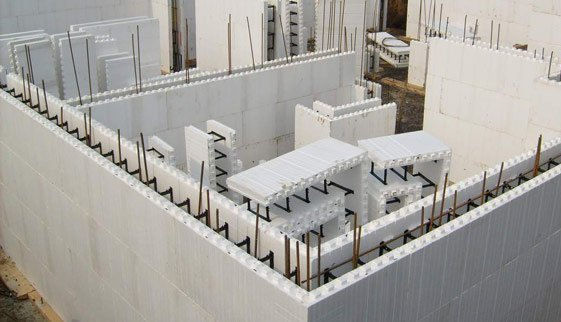
ICF consists of hollow EPS (expanded polystyrene) blocks that are stacked like Lego and filled with concrete. The EPS remains in place as insulation, forming a solid, insulated concrete wall.

2. Airtightness and Thermal Performance
Both systems can meet the ≤ 0.6 ACH @ 50 Pa airtightness requirement of Passivhaus, but they achieve it differently:
SIPs are inherently airtight due to their continuous panel construction. With proper sealing at joints, they create a highly controlled envelope with minimal thermal bridging.
ICF also performs well, but airtightness depends more on detailing around penetrations and the quality of the concrete pour.
Thermal performance:
SIPs typically offer higher R-values per wall thickness.
ICF benefits from thermal mass, which helps regulate internal temperatures and reduce peak heating/cooling loads.
3. Construction Speed and Labour
SIPs are fast to install due to their prefabricated nature. A mid-sized SIP home can be enclosed in days, reducing labour costs and weather delays.
ICF is more labour-intensive, requiring on-site stacking, bracing, and concrete pouring. However, it can be more forgiving on complex sites or sloping terrain.

4. Cost Comparison in New Zealand
As of 2025, typical residential construction costs in New Zealand range from $3,500 to $5,000 per square metre, depending on location, complexity, and finish level.
SIPs may appear more expensive upfront, but when factoring in reduced labour, faster build times, and energy savings, they can be cost-neutral or even cheaper than traditional timber framing. Labour savings alone can reduce costs by over $3,400 per unit, and SIPs can cut construction time by up to 50%.
ICF tends to be more expensive overall due to the cost of concrete and longer build times. However, it offers long-term durability and excellent performance in high thermal mass applications.
5. Design Flexibility
SIPs are ideal for simple, rectilinear forms—perfect for Passivhaus—but can be limiting for complex or curved designs.

ICF offers more flexibility in form and is often used in multi-level or curved structures.

Final Thoughts
At Imagine Architecture, we believe the best system is the one that aligns with your project goals, site conditions, and performance targets. Both SIPs and ICF can deliver Passivhaus-level performance when detailed and executed correctly.
Choose SIPs for speed, airtightness, and thermal efficiency.
Choose ICF for thermal mass, design flexibility, and long-term durability.


Our approach blends performance with beauty—whatever the system.
Need help choosing the right system for your next project? Get in touch with us at Imagine Architecture—we’d love to help you design a home that performs as beautifully as it looks.


Comments